Design a Better School Playground
Create and promote designs that transform part of your school playground into a more exciting and functional space.
Task
If you could change anything about the design of your school playground, what would it be—and why? Playgrounds aren't just places to play; they are shared community spaces that affect how students move, socialize, and feel at school.
In this project, you’ll step into the role of a designer and problem-solver, studying how your playground is used today and creating a proposal for improving it. Your goal is to design changes that make the playground more fun, more fair, and more welcoming for everyone.
Engage
To build a space that truly works, students need to understand how the current playground is actually being used.
- Map
Have students start by mapping the playground as it exists now. This can be a rough sketch or a more detailed map that identifies borders, existing structures, sports fields, natural elements, walkways, and open space. Observe
Become "playground detectives" to observe how the playground is actually used. Take time to explore how the space currently works and how it is experienced by different students. Students might notice where crowds gather, which areas feel empty, and how students move during recess.- Survey
Design and conduct short surveys to gather opinions from classmates about what they enjoy, what they find boring, and what they wish they could do differently during their outdoor time.
Once the class has collected data, students should work to identify patterns and decide what problems or opportunities stand out (such as overcrowding, isolation, unused space).
Students then choose a specific area of the playground to focus on and imagine how it could be improved. Form collaborative teams around the problem or area of the playground students want to improve.
Create
Once teams have chosen a problem or area to fix, let them know they will create a design and a proposal that balances "dream" features with the reality of space and cost.
In order to develop the best possible solution, students need to brainstorm lots of ideas, focusing on quantity, not quality. Consider using a cluster diagram or mind-mapping tool like Wixie to collect their ideas.
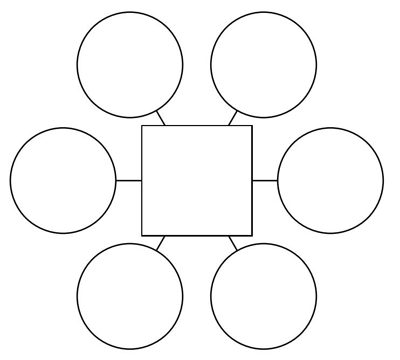
Download a Cluster organizer
After ideation is complete, have students evaluate the merits of each idea and choose the best or even combine them.
Teams should write a description and use graph paper (or digital tools) to draw the new layout to scale, showing exactly where new structures will go in relation to the old ones.
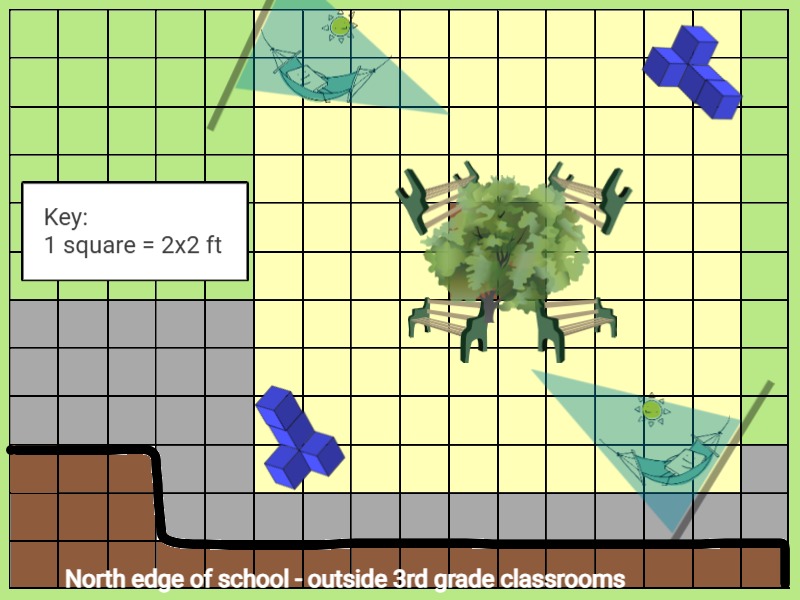
Students should also calculate the cost of equipment, surfacing, landscaping and labor to create a rough "project budget" for their proposal.
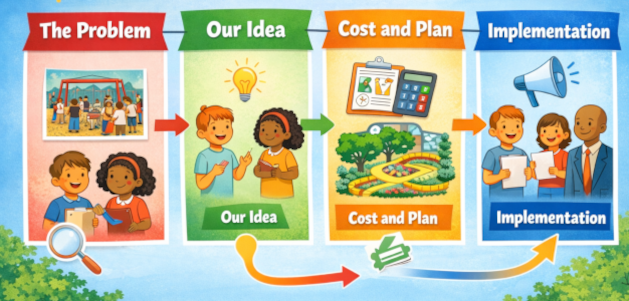
Finally, teams should develop the rest of the materials they need to clearly communicate the problem, the proposed solution, the reasoning behind it and the cost to implement. Media products such as brochures, presentations, videos, or animated walkthroughs should demonstrate how the design is beautiful and functional.
Share
A great design can comes to life if you can convince others to build it! Create a pitch presentation to explains what students want to change and how it will impact student experience on the playground. Encourage students to include survey data and designs.
Before pitching, have students share their first draft to your classmates to get feedback and refine your speaking points before the big day.
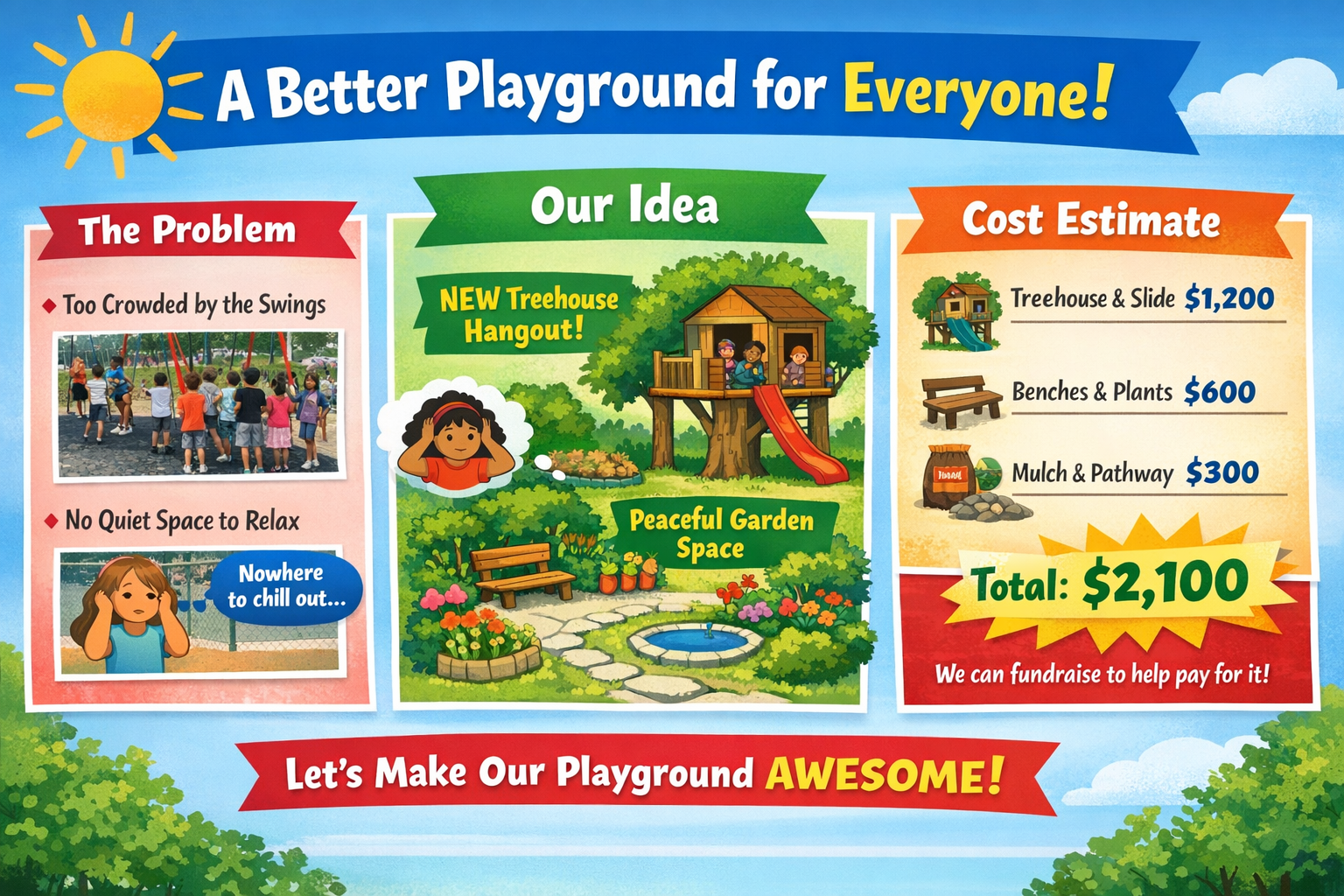 " title="image showcasing design solution, features, and cost"/>
Sharing student work with an authentic audience shows that their voice has power. Present designs and plans and pitches to the principal, parent-teacher association and/or the school board to advocate for real-world changes and work to secure funding and action.
Even if the school can't build every design right away, they have started a conversation about how to make your school a better place for every student.
Assessment
Use formative check-ins throughout the process to ensure students are on the right track. During the Engage phase, review student maps and survey questions for clarity and accuracy. During the Create phase, ask students to explain their spending choices and check if blueprints show correct measurements.
The final summative assessment should include the design, the design proposal and the pitch. You might look for:
- clear use of data (surveys/observations) to justify design choices.
- a logical map or model of the proposed changes.
- a persuasive presentation that addresses needs and identifies constraints.
Resources
Ashley Spires. The Most Magnificent Thing. ISBN: 978-1554537044
Andrea Beaty. Iggy Peck, Architect. ISBN: 978-1613129845
Chris Van Dusen. If I Built a School. ISBN: 978-0525556428
Christy Hale. Dreaming Up: A Celebration of Building. ISBN: 978-1600606519
Google Earth - View of your space
KOMPAN - Inspirational Playground Ideas
Standards
Common Core Standards
CCSS.ELA-Literacy.W.3.1 and 4.1
Write opinion pieces on topics or texts, supporting a point of view with reasons.
CCSS.MATH.CONTENT.3.MD.D.8
Solve real-world and mathematical problems involving perimeters of polygons.
CCSS.MATH.CONTENT.3.MD.C.5–7
Understand and find area; relate area to multiplication and addition.
CCSS.MATH.CONTENT.3.MD.D.8
Solve real-world and mathematical problems involving perimeters of polygons.
CCSS.MATH.CONTENT.4.MD.A.3
Apply area and perimeter formulas for rectangles in real-world situations.
Next Generation Science Standards
3–5 ETS1-1
Define a simple design problem reflecting a need or a want that includes specified criteria for success and constraints on materials, time, or cost.
3–5 ETS1-2
Generate and compare multiple possible solutions to a problem based on how well each is likely to meet the criteria and constraints of the problem.
C3 Standards for Social Studies
D2.Civ.2.3–5
Explain how a democracy relies on people’s responsible participation, and draw implications for how individuals should participate.
ISTE Standards for Students:
4. Innovative Designer
Students use a variety of technologies within a design process to identify and solve problems by creating new, useful or imaginative solutions. Students:
a. know and use a deliberate design process for generating ideas, testing theories, creating innovative artifacts or solving authentic problems.
6. Creative Communicator
Students communicate clearly and express themselves creatively for a variety of purposes using the platforms, tools, styles, formats and digital media appropriate to their goals. Students:
a. choose the appropriate platforms and tools for meeting the desired objectives of their creation or communication.
b. create original works or responsibly re-purpose or remix digital resources into new creations.
d. publish or present content that customizes the message and medium for their intended audiences.

Melinda Kolk is the Editor of Creative Educator and the author of Teaching with Clay Animation. She has been helping educators implement project-based learning and creative technologies like clay animation into classroom teaching and learning for the past 25 years.




 Most Read