Deepening Citizen Science Work
Expand students role from data collectors to science knowledge creators
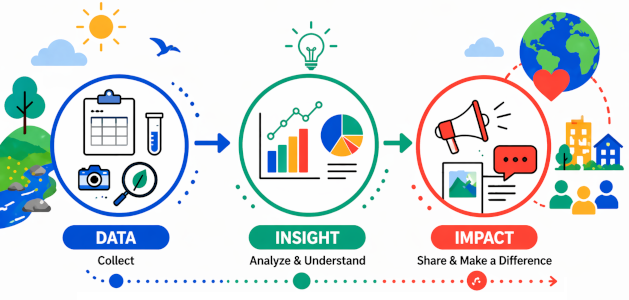
Citizen science opens the door for students to step into the role of real scientists. Instead of only reading about ecosystems, weather patterns, or environmental change, students gather data, make observations, and contribute to ongoing research efforts.
On paper, it sounds like the perfect example of authentic learning. But in practice, it often looks like this:
Students collect data → upload it → done.
While this participation matters, it often misses an opportunity to deepen learning. When students go further by analyzing findings, creating meaningful products, and sharing their insights, science becomes visible beyond the classroom and students see the impact of their work.
A Creative Citizen Science approach makes this shift possible. By extending the experience into analysis, creation, and communication, it strengthens science learning, builds literacy and data fluency, and gives student work real purpose and audience.
Use this process to add a deeper layer to the work students are already doing with citizen science.
Phase 1: Observe & Contribute
In the first phase of a creative citizen science experience, students step into the role of contributors. They participate in an established citizen science program such as iNaturalist, Project BudBurst, or Zooniverse, where their work becomes part of a larger scientific effort.
Students learn to observe carefully and contribute responsibly. They begin to understand that science depends on consistency, accuracy, and attention to detail. As they engage in the process, they:
- follow established research protocols
- collect and record observations or measurements
- share their data with the larger project
- learn how and why their data is being used
Students begin to see patterns, ask questions, and recognize that their contributions matter. Most importantly, this phase helps build scientific identity. Students start to think of themselves not just as learners of science, but as participants in it—people who can observe, record, and contribute to our understanding of the world.
These actions may seem simple, but they are essential as they lay the foundation for deeper learning. Its impossible to deepen or extend this process if this phase doesn't provide a strong foundation. Revisit your existing citizen science program to ensure that it is running smoothly. If you haven't yet started with citizen science, focus on this section for at least a year before taking a creative approach.
Phase 2: Analyze & Interpret
In the second phase, students shift from collecting data to making sense of it, moving beyond participation and into deeper scientific thinking. Students begin to look closely at the information they’ve gathered, considering patterns, trends, and possible explanations. They are no longer just contributing data, they are working to understand it.
As students engage in this phase, they start to think more like scientists. They:
- compare their local data to regional or national datasets
- identify patterns and trends
- ask new questions based on what they notice
- create simple graphs, charts, or visualizations to represent their findings
Students begin to recognize that data is not just something to collect, it is something to interpret. They learn that different data points connect to tell a larger story and that their observations are part of a broader system. This phase also encourages curiosity, as new questions naturally emerge from the patterns they see.
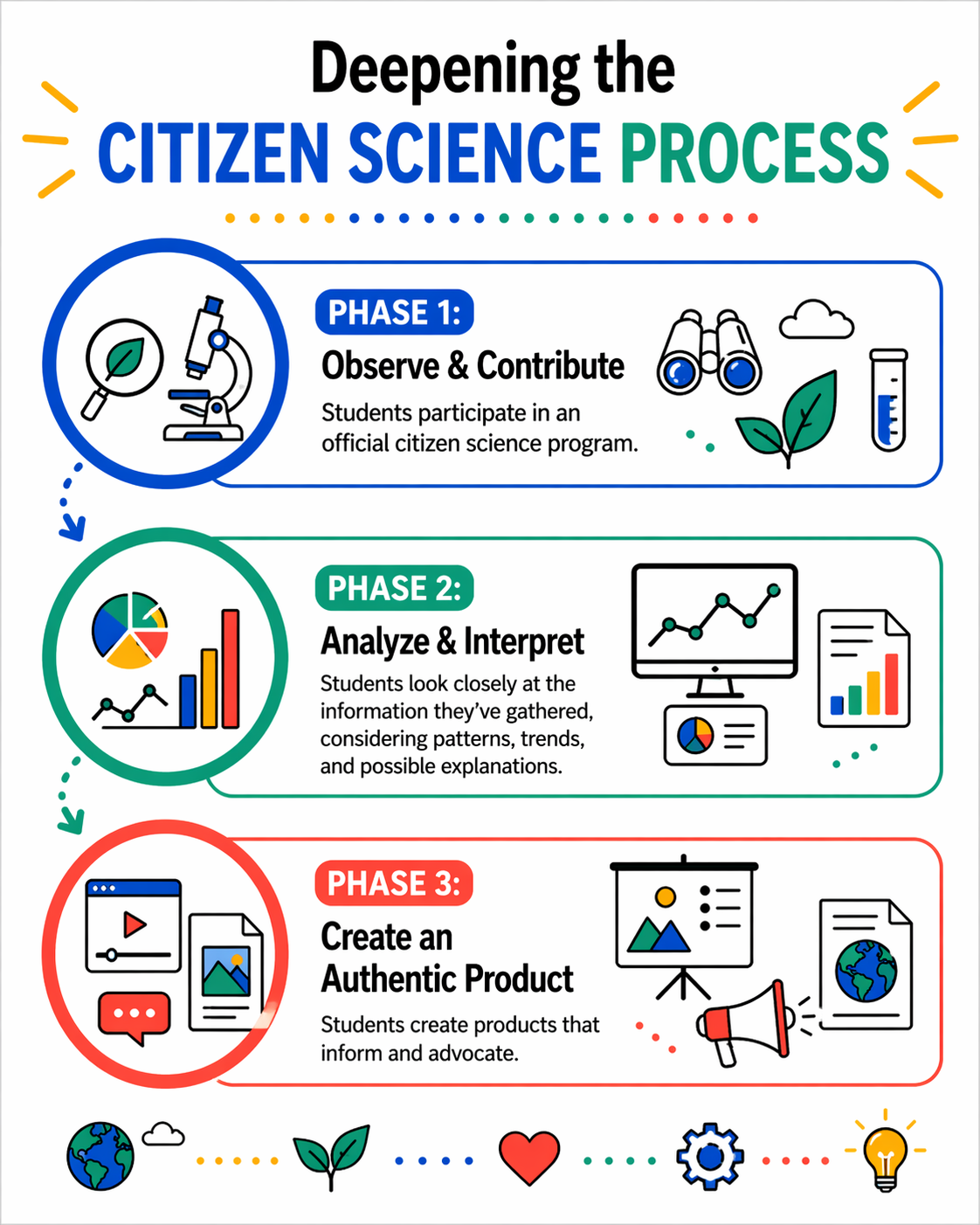
Just like Phase 1, this step is essential. Without time to analyze and interpret, data collection remains surface-level. When students are given space to explore what their data means, they build critical thinking skills and a stronger understanding of scientific concepts.
This phase lays the groundwork for the final step—where students take what they've learned and share it with others in meaningful ways.
Phase 3: Create an Authentic Product
In the final phase, students take what they have learned and share it with others. Instead of ending with a worksheet or lab report, students create something designed for an audience beyond their teacher.
At the elementary level, students can easily create products that raise awareness and share simple observations, such as:
- create banners to celebrate community biodiversity
- develop a local nature guide
- produce public service announcements on severe weather safety
At the secondary level, students can create products to inform and advocate, such as:
- design infographics providing data connected to local issues
- write letters to city council members to advocate for new laws
- run social media campaigns for community health
This phase brings purpose to the entire process. When students know their work will be seen and used by others, they take greater care in how they explain their thinking. They begin to see that science is not only about collecting and analyzing data, but also about sharing knowledge in ways that others can understand.
While other students, teachers and parents are a great audience to start, if student work is impacting the community, be sure they are the audience for student work. Local data should be shared with the concerned citizens, connected agencies and local government officials. Health and ecosystem data needs to be shared with scientific groups and even other countries.
It's worth it to make the leap
Through this process, students move from participants in science to communicators of it, making their learning both visible and impactful.
Citizen science is at it most powerful as a learning tool when we extend it into meaningful, visible learning. When students collect data, analyze what it means, and share their findings with others, they experience science as something active, relevant, and purposeful.
A Creative Citizen Science approach doesn't replace what teachers are already doing—it strengthens it. It builds on strong observation and data collection, deepens understanding through analysis, and brings learning to life through authentic products and audiences.

Melinda Kolk is the Editor of Creative Educator and the author of Teaching with Clay Animation. She has been helping educators implement project-based learning and creative technologies like clay animation into classroom teaching and learning for the past 15 years.


 Most Read